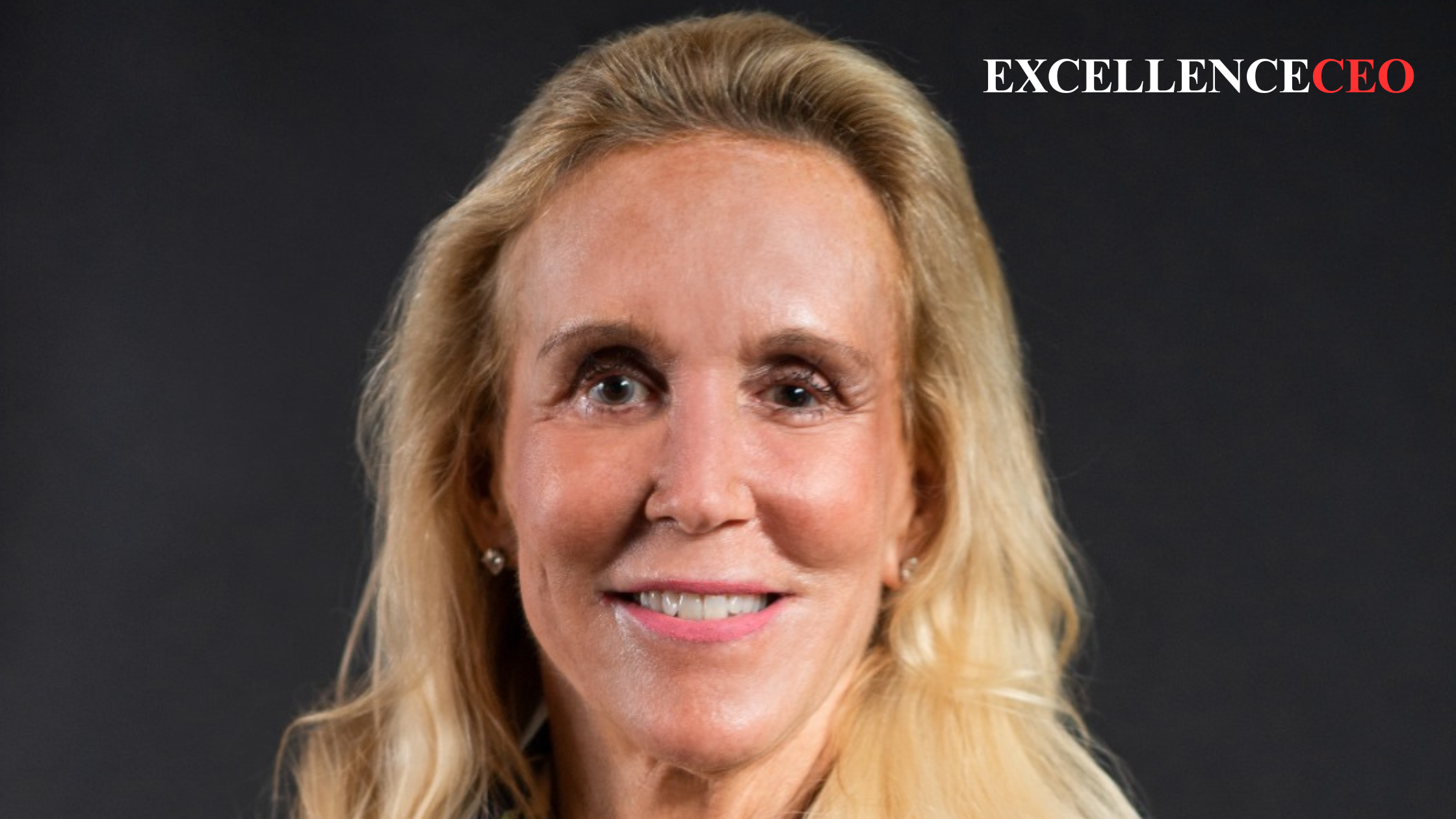
There comes a moment in some careers that feels quiet on the outside but changes everything on the inside. It does not arrive with a promotion, an award, or a big public celebration. It arrives as a question. A hard one. Is this still what I am meant to do?
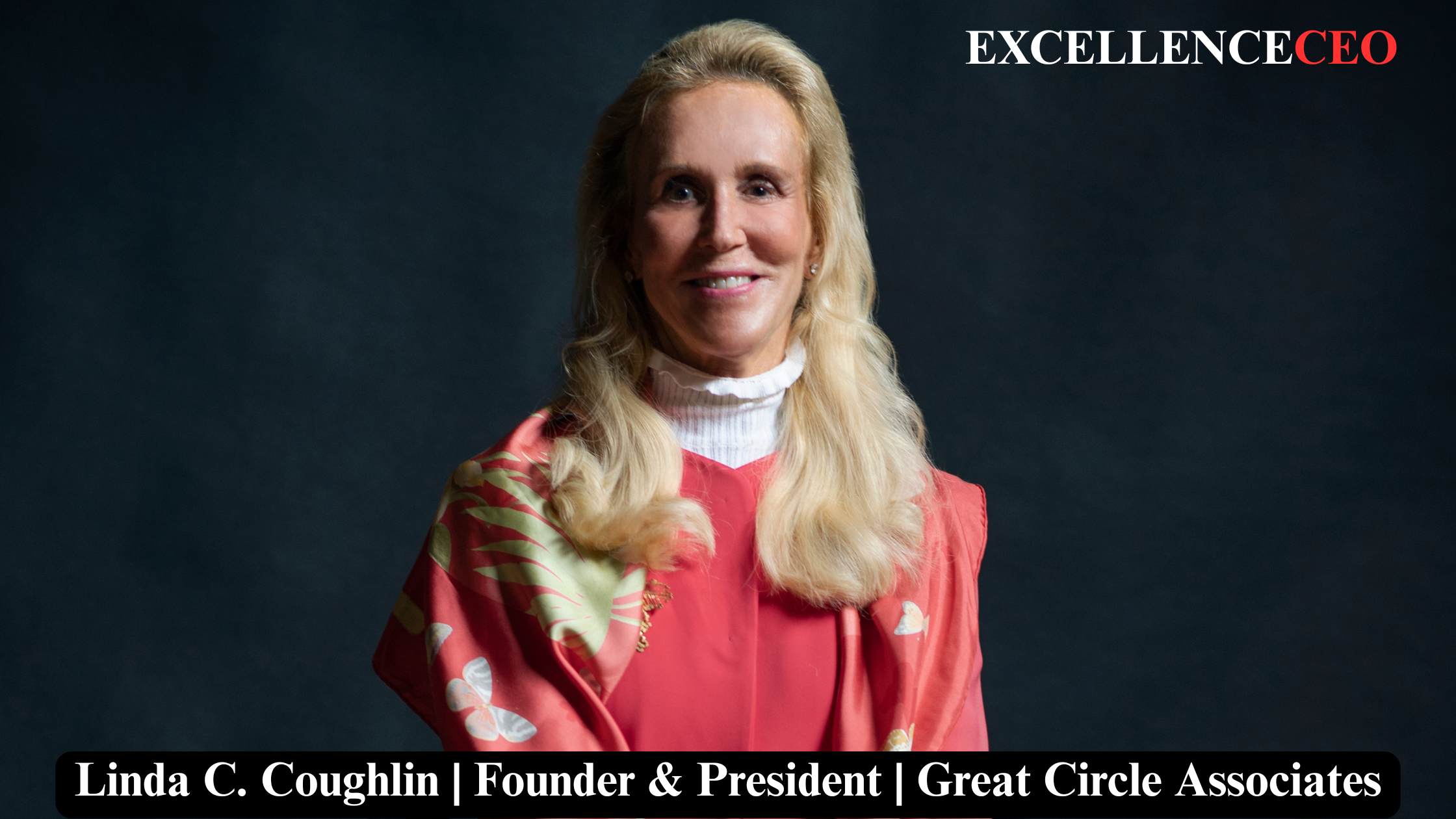
For Linda (Lin) Coughlin, that question came after decades of achievement. She had already built a remarkable career inside some of the most demanding organizations in corporate America. She had led transformation, rebuilt businesses, guided teams through uncertainty, and earned a reputation as a leader trusted in high-stakes moments. But even after all of that, she felt the need to stop and reflect.
“I became aware that it had been some time since I had taken a step back to assess my learnings as a change maker,” she said. That realization became the beginning of a new chapter: not a departure from leadership, but a deeper expression of it.
A Turning Point Before Business
Long before she was advising executives and leadership teams, Lin’s life was moving in a very different direction. She was a professional equestrian, fully immersed in that world, until one unexpected moment changed the course of her future.
“A former professional equestrian, I took a bad fall that led to my employment in the private sector,” she explained.
What could have remained a story of loss became a story of reinvention. Instead of allowing that moment to define what she could no longer do, she used it to begin again. Her path into business was not smooth or easy. She worked three jobs at once, building her future with discipline, resilience, and determination.
That early chapter shaped her in an important way. It taught her that change is rarely neat, and growth rarely begins with comfort. Those lessons would later become central to the way she leads.
What that experience gave her, beyond resilience, was empathy for reinvention. She knows what it feels like when life changes direction before you are ready for it. That matters because much of her later work would center on helping other people navigate moments like that. Long before she advised leaders through disruption, she had already lived through the emotional reality of having to begin again. That personal understanding gives her work an unusual depth. She is not simply teaching change as a strategy. She understands it as a human experience.
Building a Career in the Hardest Moments
As Lin rose through the ranks at American Express, Citibank, and Scudder Investments, she became known for stepping into the kinds of situations many leaders avoid. These were not steady-state assignments. They were moments of disruption, complexity, and uncertainty. They involved turnarounds, restructurings, integrations, start-ups, and large-scale strategic change.
She was not simply managing operations. She was helping organizations rethink how they worked, how they grew, and how they adapted when the status quo no longer served them.
At Cendant Corporation, for example, she led work that eliminated more than $100 million in expenses and helped restructure an enormous global corporate infrastructure. Later, when a decision was made to split the four businesses into four stand-alone publicly held entities, she was tapped to help lead the separation and transition.
These were not small assignments. They were the kinds of challenges that test not only strategy, but stamina, judgment, and courage.
That kind of work also demands something harder to measure: the ability to stay calm while other team members are losing confidence. Again and again, Lin was trusted in the moments that mattered most, and leaders needed both clarity and steadiness. It was not only her operational skills that made her valuable. It was her ability to help people keep moving when the future was still uncertain.
More Than Results
What makes Lin’s story compelling is that the numbers, while impressive, are not the center of it. What mattered most to her was never only the outcome on paper. It was also what happened to the people involved.
In her own words, the most meaningful part of her leadership approach was the investment she made in developing others. She described her signature style as one that emphasized strategic investments in high-potential leaders, even in difficult turnaround environments. Those investments, she said, “never failed as leaders became consistently emboldened.”
That word, “emboldened\” says everything. It suggests something beyond instruction or supervision. It suggests a leader who helps other people believe they are capable of more, then equips them to prove it.
This focus on people, not just performance, became one of the defining threads of her career. That belief would later become one of the clearest differentiators in her advisory work. In many organizations, change is treated as a structural or strategic exercise. Lin has long understood that change is not just structural, it is deeply human. Systems can be redesigned on paper, but real transformation depends on whether people feel capable of carrying it forward. In her world, confidence is not a side benefit of change. It is part of what makes change possible in the first place.
The Moment She Stepped Back
After years of leading transformative initiatives from inside major organizations, Lin began to realize that something deeper had been taking shape. She had not only been leading change. She had been learning what makes change endure.
That insight became a turning point. As she reflected on her years in operating roles, she recognized what she called “the secret sauce to creating movements for change that endured.” She also recognized that her purpose had not changed, even if her role needed to. Her purpose, she said, was “to enable the enactment of positive and enduring enterprise-level and individual change.”
But purpose sometimes asks to be expressed differently.
Instead of remaining the person responsible for driving transformation from the inside, she chose to focus on helping others learn how to do it themselves. She wanted to share what she had learned with leaders willing to grow, stretch, and lead with more courage and skill.
Founding Great Circle Associates
That decision led to the creation of Great Circle Associates in 2008. It was not the launch of a generic consulting business. It was the formal expression of a mission she had already been living for years.
Great Circle Associates was founded to help leaders, leadership teams, and organizations navigate what Lin calls “change at core.” The firm works with corporate executives, entrepreneurs, and high-potential leaders who are facing growth challenges, turnarounds, transitions, and disruptive departures from the status quo.
Its purpose is both clear and ambitious: to enable the rapid, well-executed implementation of sustainable change at the enterprise, team, and individual levels.
This is not a surface-level change. It is a transformation that lasts. Unlike many advisory firms that stay at high-level recommendations, Great Circle Associates was built around implementation. Lin’s work sits at the intersection of strategy, leadership development, communications, and risk mitigation. The point is not simply to imagine a better future state, but to help clients move toward it in ways that are practical, measurable, and sustainable over time.
What “Change at Core” Really Means
One of Lin’s most important ideas is also one of the most powerful: not all change is equal.
Some change is cosmetic. It updates language, systems, or reporting lines. But deeper change asks something more difficult. It asks individuals and organizations to rethink long-held assumptions, habits, and ways of operating.
Lin calls this “Change at Core™.” She defines it as “decisive departures from deeply embedded mindsets and mature entrenched cultures, structures, business processes, ways of making decisions, problem-solving approaches, and conflict resolution processes.”
That kind of change is hard because it reaches below the surface. It affects how people think, how they behave, and how they respond when pressure rises. It can be uncomfortable. It can create strain. But it is also the kind of change that lasts.
Lin built her practice around helping leaders make that kind of change possible.
Leading Without Taking Over
One of the most distinctive things about Lin’s work is how she describes her role. She says that, as an advisor, she often “leads without leading.”
That phrase captures something essential about her style. She is not interested in stepping in and becoming the hero of someone else’s transformation. Instead, she helps leaders and teams clarify the vision, assess reality honestly, and build the skills and confidence needed to execute meaningful change themselves.
Her assignments are often immersive. She may shadow leaders as they move through highly disruptive business or career transitions, helping them respond in real time to the strategic, operational, and personal challenges that arise.
This is not coaching from a distance. It is partnership in the middle of complexity.
The Human Side of Transformation
Over the years, Lin has developed a sharp understanding of what really holds leaders back. One of the most significant barriers she has identified is imposter syndrome.
She notes that more than 70 percent of leaders and high-potential leaders experience feeling like an imposter, even when they are accomplished and highly capable. This self-doubt can quietly weaken decision-making, limit bold action, and keep talented people trapped inside patterns they are fully capable of outgrowing.
Lin is deeply focused on helping leaders break free from that internal barrier. Her stated vision includes enabling leaders “to break from the shackles of imposter syndrome and in turn the tyranny of the status quo.”
That language is strong for a reason. She sees imposter syndrome not as a small confidence issue, but as a serious force that can prevent leaders from making the difference they are capable of making.
Why Emotional Intelligence Matters
If there is one theme that runs through Lin’s philosophy of leadership, it is that performance without humanity is not enough.
She believes emotional intelligence is one of the defining characteristics of great leadership in the 21st century. In her words, “Leaders are judged not just by what they achieve but how they lead.”
For her, emotional intelligence is not soft or secondary. It is practical. It helps leaders build trust, manage conflict, stay resilient, and inspire others under pressure. It allows them to guide teams through uncertainty without creating fear, and to create cultures where people feel safe enough to contribute, take measured risks, and grow.
In a fast-moving, high-pressure world, that kind of leadership has become essential.
A New Era of Leadership
Lin is also clear-eyed about the future. She sees the leadership landscape changing quickly. Technology, especially AI, will shape how leaders access insights and make decisions. But she does not believe technology can replace what matters most.
“AI will offer behavioral insights, but human wisdom and empathy will remain essential,” she said.
That belief sits at the center of her long-term vision. She sees a future where coaching becomes more deeply tied to business strategy, where leaders need stronger emotional grounding, and where purpose-driven leadership becomes even more important.
She is already building toward that future through new initiatives, including GCA Learning Solutions, a year-long development platform designed to deliver immersive learning and coaching experiences to high-potential women leaders.
A Philosophy Grounded in Growth
For all of Lin’s achievements, what stands out most is the clarity of her philosophy. She is not driven by ego, and she does not describe leadership as power for its own sake. Again and again, her language returns to service, humility, courage, and growth.
Her advice to future leaders is simple and memorable: “Be better today than yesterday; be better tomorrow than today.”
That idea captures the spirit of her entire journey. Leadership, in her view, is not a fixed identity that one earns and then protects. It is a practice. It asks for self-awareness, reflection, adaptability, and the willingness to continuously evolve.
The Question at the Center of It All
Lin’s story is about transformation, but not only in the corporate sense. It is about what happens when a person who has already succeeded decides to ask deeper questions about meaning, contribution, and purpose.
Her life’s work suggests that real leadership begins when we stop asking only what we can achieve and begin asking what we are here to enable in others.
And maybe that is why her story resonates so strongly now. Because in a world obsessed with momentum, titles, and external success, she reminds us to pause and ask something more important.
When was the last time you checked in with your purpose?
That question shaped Lin Coughlin’s next chapter. For many readers, it may quietly begin one of their own.