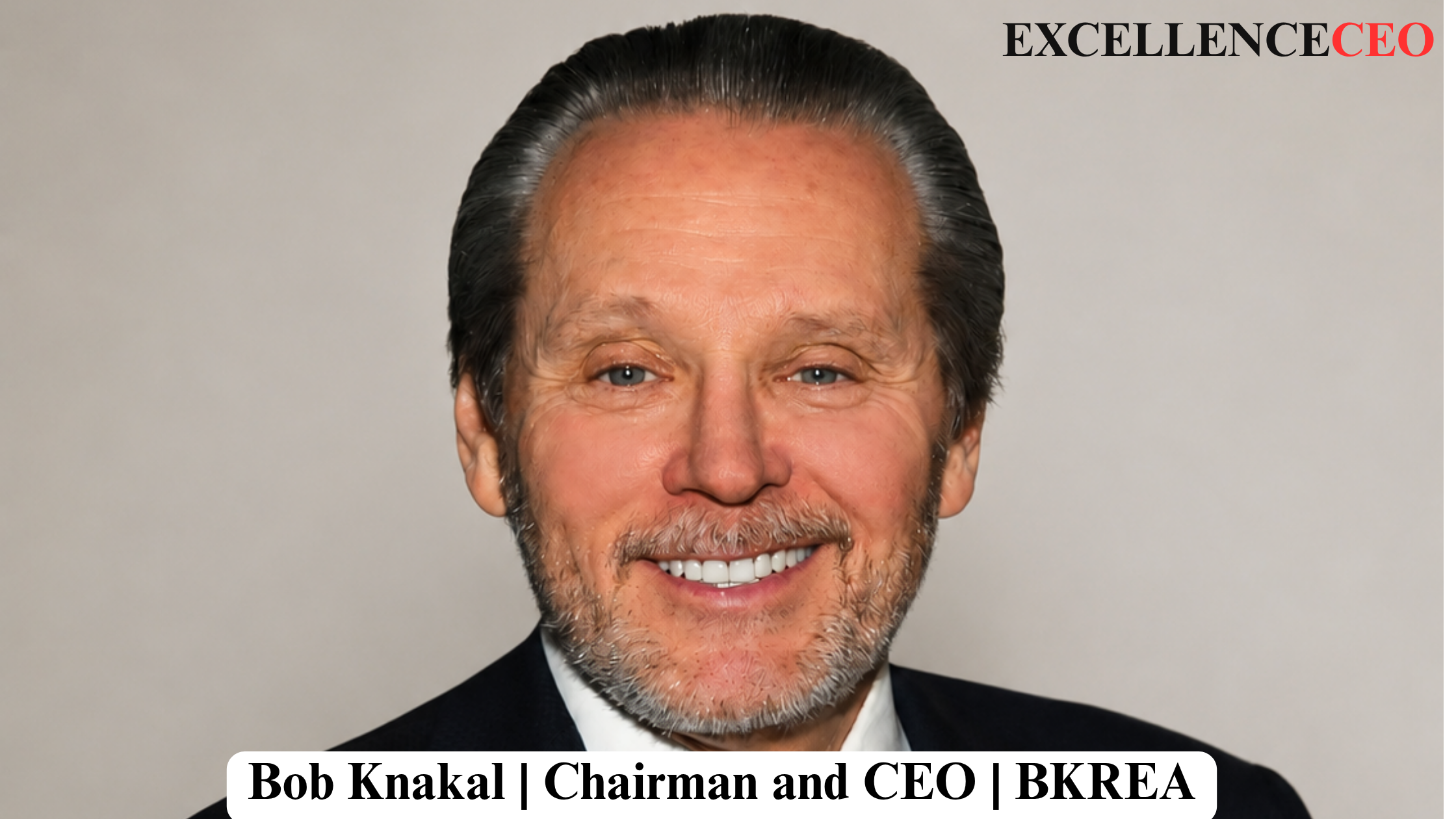
There are people who go through life treating business like a sprint. And then there are people who treat it like baseball. Bob Knakal has always treated it like baseball, and that distinction explains almost everything about his career.
Long before he became one of the most prolific commercial real estate brokers in American history, before he sold more than 2,400 New York City buildings totaling more than $24 billion in aggregate consideration, before he built and sold one of the most dominant brokerage firms the industry has ever seen, Knakal was a kid obsessed with statistics, repetition, competition, and incremental improvement. The baseball field came first, and in many ways, everything else grew out of it.
Growing up in Maywood, New Jersey, Knakal developed an unusual fascination with numbers at an early age. While most children simply wanted to play the game, he wanted to measure it. At eight years old, he was meticulously keeping his Little League pitching statistics by hand, wins, losses, strikeouts, walks, innings pitched, and earned run average. Every outing became data. Every improvement became measurable. Every weakness became identifiable. Most kids looked at baseball emotionally. He looked at it analytically. That instinct never left him.
From Little League Statistics to Billion-Dollar Transactions
Decades later, after selling thousands of buildings, Knakal still speaks about brokerage the same way baseball people talk about the game, batting averages, lifetime statistics, consistency, reps, discipline, fundamentals, and small edges compounded over long periods of time. In many ways, his entire career became a giant baseball season that has lasted 42 years…so far.
And the statistics are staggering. More than 2,402 buildings sold. More than $24 billion in aggregate consideration. More than 4,000 properties were sold by Massey Knakal Realty Services during its dominant 14-year run from 2001 through 2014, more than three times more than the second most active firm in New York City during that same period. At that period of unparalleled dominance came while the local one-market firm was competing against much larger and more powerful regional, national, and global competitors. Then came the ultimate “franchise sale.” In 2014, Cushman & Wakefield acquired Massey Knakal for approximately $100 million. For many people, that would have been the perfect ending. For Knakal, it was only the seventh inning.
After spending time running investment sales at Cushman & Wakefield and later at JLL in New York, he did something few people at his level would ever have the courage to do. At age 62, rather than slowing down, he started over completely.
Starting Over at 62: The Birth of BKREA
In April of 2024, he launched BKREA, and almost immediately, the numbers started piling up again. By 2025, the firm had completed approximately $1.8 billion in transaction volume across dozens of assignments throughout New York City. To most people in the business, those numbers seemed almost incomprehensible for a startup operation competing against massive global firms with thousands of employees and virtually unlimited resources. But to Knakal, it was simply another season. Another box score. Another opportunity to keep pounding the rock.
That phrase, “pounding the rock,” has become one of the defining themes of his career and philosophy. Knakal frequently references the old stonecutter analogy: the rock does not split on the hundredth blow because of the hundredth blow. It splits because of the ninety-nine that came before it.
The Power of Specialization
That is how he sees brokerage, not as moments, but as repetitions. And nowhere is that philosophy more visible than in the discipline and consistency that built his career. For more than four decades, Knakal maintained an almost obsessive commitment to a narrow slice of the market. While many brokers bounced from asset class to asset class, geography to geography, or trend to trend, he did the opposite. He specialized relentlessly. Prime Manhattan. Investment properties. Development sites. New York City only. As he often says, “Generalists get considered. Specialists get selected.”
That philosophy mirrors elite baseball players who dominate not because they do everything, but because they master something extraordinarily well. Mariano Rivera did not throw six pitches. He became unhittable with one. Great hitters are not trying to be average at everything. They develop a repeatable swing and refine it endlessly. Knakal approached brokerage the same way. He refined a system. Then refined it again. Then refined it again. And over time, those incremental gains compounded into one of the most dominant brokerage platforms New York City has ever seen.
The Territory System: Winning Through Informationx
At Massey Knakal, one of the firm’s greatest competitive advantages became its famous Territory System, an extraordinarily granular hyperlocal coverage strategy that assigned brokers to very specific neighborhoods and property types. While competitors broadly covered Manhattan, Brooklyn, Queens, the Bronx, or the broader region, Massey Knakal brokers became deeply immersed specialists within tiny geographic slices of the city.
The philosophy was simple: know more than everyone else. Not slightly more. Exponentially more. Who owns every building. Who refinanced recently. Whose loan is maturing. Who has partnership issues. Who has estate problems. Who secretly wants to sell six months before the market knows.
Again, the baseball parallels are impossible to ignore. Great baseball organizations obsess over information advantages, matchups, tendencies, spray charts, arm angles, exit velocity, and tiny data edges that accumulate over time and eventually separate winners from losers. Knakal built his business exactly the same way.
“We realized early on that we were not really in the brokerage business,” he often says. “We were in the information business.”
Building Proprietary Intelligence
That realization changed everything. Today, that obsession with information and analytics has evolved even further through the creation of some of the most sophisticated proprietary data systems in the New York City investment sales industry: The Knakal Map Room, The Knakal Land Index, and the BKREA Developer Ranking System. To outsiders, they sound like branding exercises. In reality, they are weapons.
The Knakal Map Room alone represents more than 220 hours of physical fieldwork personally conducted by Knakal during the spring and summer of 2020, walking every block of Manhattan south of 96th Street on the east side and south of 110th Street on the west side, documenting development pipelines, zoning opportunities, conversions, demolitions, and future supply.
Most people in brokerage study markets from behind desks. Knakal walked the market, block by block, building by building. Again, it feels deeply baseball-like. The best managers are not merely reading statistics. They are watching the game. Feeling momentum. Observing mechanics. Understanding psychology. Identifying patterns before others recognize them.
Reading the Market Before Everyone Else
That ability to “read the market” has become one of Knakal’s defining skills. Throughout his career, he became obsessed with studying transaction volume, pricing cycles, ownership turnover, lending conditions, unemployment trends, tax policy, and buyer psychology.
Over decades, he developed an instinctive feel for market shifts that allowed him to identify inflection points before the broader market recognized them. That analytical framework produced one of his most fascinating long-term studies, a 42-year analysis of Manhattan investment property sales dating back to 1984. More than 29,000 transactions analyzed.
The findings revealed powerful patterns surrounding unemployment, tax policy, ownership duration, and transaction velocity. One statistic particularly fascinated him: the average Manhattan investment property now changes hands only approximately once every 40 years.
Why Every Assignment Matters
Think about that for a moment. Imagine if you are going to play baseball and you only get one at-bat every four decades, every swing matters enormously. That is how Knakal views brokerage assignments.
You are not merely selling a building. You are often advising on a once-in-a-generation decision for a family. That perspective fundamentally changes how you approach the assignment. It also explains why Knakal became known for seller-only representation and exclusive listings. In baseball terms, he never wanted divided loyalties. He wanted one dugout. One team. One mission. Maximize value for the client.
That clarity of alignment became a defining BKREA differentiator.
Reducing Uncertainty, Increasing Value
Unlike many large brokerage firms with lending, management, leasing, and investment banking divisions that can create competing internal incentives, BKREA positioned itself as a conflict-free seller representation focused solely on achieving the highest possible price on the best terms as quickly as possible.
And in development site brokerage, particularly, Knakal understood something many others missed: reducing uncertainty increases value.
That realization became central to many of the firm’s most successful campaigns.
Through BKREA’s Zoning & Policy SWAT Team, buyers are armed with entitlement strategies, massing studies, after-tax analyses, development scenarios, and underwriting support designed to compress uncertainty and increase confidence. The result is often more aggressive bidding and materially higher pricing outcomes.
Again, the baseball comparison fits perfectly. The best organizations reduce uncertainty before the game begins. Preparation narrows randomness. Data improves decision-making. Repetition improves execution.
The Three Pillars of Longevity
But perhaps the most remarkable part of his story is not the statistics. It is the longevity.
Baseball reveres longevity because sustaining elite performance over decades is brutally difficult. Players age. Motivation fades. Discipline erodes. Markets change. Competition evolves.
Yet somehow, Knakal has remained intensely productive across four consecutive decades.
Why?
The answer appears to come down to three things: passion, expertise, and discipline.
Those are the three words that frequently anchor his keynote speeches and mentorship teachings. Passion because nobody sustains greatness for 42 years without genuinely loving the process. Expertise because specialization creates compounding advantages over time. Discipline, because talent without consistency eventually collapses.
The Daily Habits Behind the Success
Knakal’s daily habits became legendary among colleagues and competitors alike, with prospecting consistency, market tracking, information gathering, relationship maintenance, repetition, routine, and relentless follow-up.
Not glamorous. Not complicated. But extraordinarily effective.
In baseball, Hall of Fame careers are rarely built on highlight reels alone. They are built on showing up every single day for thousands of games, taking batting practice, studying film, running drills, and maintaining fundamentals long after others become complacent.
Knakal approached brokerage exactly that way.
A Legacy of Mentorship
And perhaps that is why his greatest source of pride today is not the transaction volume, the firm sale, or the statistics. It is the people.
Over the course of his career, approximately 35 companies or divisions within the New York City commercial real estate industry have come to be owned or led by brokers who learned the business under his mentorship.
That legacy matters deeply to him because, in many ways, baseball is also a mentorship culture. Veterans teach rookies. Managers shape young talent. Clubhouse cultures get passed from generation to generation.
Knakal sees brokerage the same way.
That philosophy ultimately inspired the launch of The Knakal Dealmakers Knetwork, a mentorship platform designed to compress 42 years of lessons, mistakes, strategies, and experiences into practical guidance for younger professionals trying to build meaningful careers.
“This is not coaching,” he often says. “It’s mentorship.”
There is a difference. Coaching often focuses on tactics. Mentorship focuses on perspective. And perspective is ultimately what separates people who merely survive from those who build enduring careers.
Playing the Long Game
Knakal’s perspective has always been unusually long-term. Perhaps that comes from baseball.
Baseball teaches patience. It teaches delayed gratification. It teaches that failure is unavoidable. A Hall of Fame hitter fails seven out of ten times. A pitcher gives up home runs. A great team loses sixty games. You keep going anyway.
Commercial real estate brokerage is remarkably similar.
Deals die. Clients leave. Markets collapse. Interest rates spike. Assignments disappear unexpectedly. You lose listings you should have won. You work on transactions for months that never close. And then one day, unexpectedly, the momentum changes.
That emotional resilience became one of Knakal’s greatest competitive advantages. He never became too high after victories or too low after setbacks. Like great baseball players, he understood that careers are built over seasons, not moments.
A Hall of Fame Career Still in Progress
And perhaps that is the best way to understand Bob Knakal, not as a broker, not as an executive, not even as a real estate entrepreneur, but as a baseball player who happened to choose commercial real estate instead of Major League Baseball as his field of competition.
The scorekeeping mentality remained the same. The obsession with statistics remained the same. The love of repetition remained the same. The fascination with incremental improvement remained the same. The discipline remained the same.
And now, more than four decades into his career, the numbers tell an extraordinary story.
More than 2,400 buildings sold. More than $24 billion in aggregate consideration. One of the most dominant brokerage firms in New York City’s history. A $100 million company sale. A successful restart at age 62. A new firm producing billions in sales volume. Thousands of relationships built. Entire careers launched. An enduring reputation for integrity, preparation, discipline, and expertise.
In baseball terms, it is not merely a good career.
It is a Hall of Fame career.
And remarkably, the season is still going.