In boardrooms across the world, companies are asking the same question: What do customers actually want?
For decades, businesses believed they understood the answer. Strong products, recognizable branding, and competitive pricing were often enough to secure loyalty. But in today’s economy, where consumers can abandon a brand with a single swipe or review, the margin for error has become painfully small. Customer experience is no longer a secondary concern. It is the business.
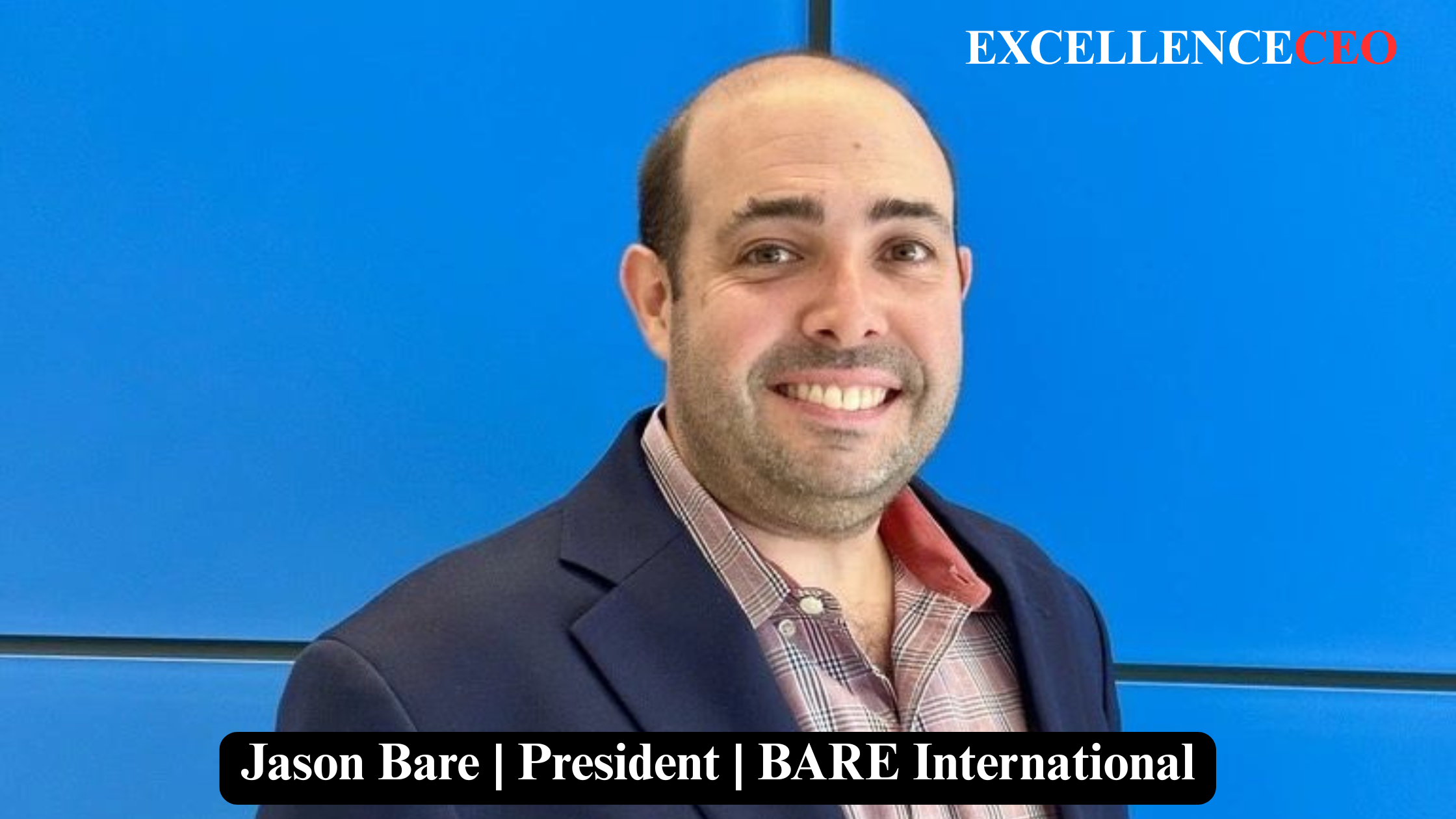
Few people understand this shift better than Jason Bare, President of BARE International, one of the world’s most established customer experience research firms. Operating across more than 165 countries and supported by a global network of evaluators and auditors, the company has spent nearly four decades helping brands understand how customers truly experience their businesses at the front line.
Under Bare’s leadership, BARE International keeps evolving in a quickly changing market driven by technology, automation, evolving consumer expectations, and increased demand for personalized experiences. Despite the changing tools, the company’s mission has remained the same.
“At the time, mystery shopping and customer experience measurement were still emerging concepts,” Bare explains. “My parents recognized a gap in the market for reliable, objective insights into how businesses were delivering service at the front line.”
That simple idea eventually became a global enterprise.
What makes Jason Bare’s leadership particularly compelling is that he did not inherit a company and merely preserve it. He inherited a philosophy and transformed it for a new era.
The result is a business that remains deeply human while embracing the future of data and artificial intelligence with uncommon clarity.
Growing Up Inside the Business
Leadership often begins long before the title arrives.
For Jason Bare, BARE International was never simply a company. It was part of the environment he grew up in. Founded in 1987 by his parents, Dale and Michael Bare, the business was built around a straightforward but ambitious principle: helping companies see themselves through the eyes of their customers.
Long before customer experience became a corporate obsession, BARE International was already developing systems to evaluate service quality, operational consistency, and consumer satisfaction through mystery shopping and market research.
Bare’s understanding of business came from both formal education and immersion in the company itself.
“My professional journey has been shaped by both formal education and hands-on experience within a family-founded business,” he says.
“I earned my degree in Business Administration, which gave me a strong foundation in operations, strategy, and leadership. However, much of my real-world learning came from growing up around BARE International and later working across different roles within the organization.”
That exposure mattered.
Instead of following a traditional executive pathway into leadership, Bare gained a comprehensive understanding of the organization from various angles. He gained experience in operations, client services, expansion initiatives, and leadership development. This helped him grasp not only the operational aspects of the business but also the emotional challenges involved in managing people, clients, expectations, and growth across diverse cultures and markets.
“I’ve had the opportunity to engage in multiple aspects of the business, from operations and client services to global expansion and leadership development. This exposure allowed me to understand not only how the business functions day-to-day but also how to scale it strategically.”
That gradual progression shaped the kind of leader he would eventually become. Not performative. Not detached. Not obsessed with executive image-making.
Instead, Bare built his leadership style around observation, listening, adaptability, and operational trust.
The Experience Economy
Modern consumers are no longer loyal by default.
A single poor interaction can spread online within minutes. One negative customer service moment can outweigh years of marketing investment. Businesses today are judged not only by what they sell but by how they make people feel.
That reality has fundamentally changed the role of customer experience research.
BARE International operates in a space where data intersects with psychology. The company helps organizations understand how customers interact with brands across physical stores, digital platforms, hybrid environments, support channels, and service touchpoints.
But Bare believes the company’s real differentiator is not simply the volume of information it gathers. It is the quality and usability of the insight itself.
“What differentiates us is our ability to combine human insight with evolving technology to deliver actionable intelligence,” he explains.
That phrase, human insight, remains central to BARE International’s identity.
Technology Without Losing Humanity
Artificial intelligence has become one of the defining business conversations of this decade.
Every industry is now trying to determine how automation, predictive analytics, machine learning, and real-time data will reshape operations. Customer experience research is no exception.
But Jason Bare approaches the conversation differently from many executives eager to frame AI as a total replacement for human evaluation.
For him, the challenge is balance.
“One of the biggest challenges in our industry is adapting to rapidly changing customer expectations,” he says. “Consumers today expect seamless, personalized experiences across all channels, and businesses must evolve quickly to meet those demands.”
Technology is essential to meeting that demand. But so is preserving context, empathy, nuance, and interpretation.
“The integration of technology, particularly AI, presents both opportunities and challenges,” Bare explains. “While it enhances efficiency and scalability, maintaining the human element of customer experience evaluation remains critical.”
That philosophy is shaping the company’s next phase of innovation.
“We are exploring new ways to integrate predictive analytics and real-time insights, helping clients move from reactive decision-making to proactive strategy development,” Bare says.
It is a significant evolution from the early days of traditional mystery shopping. Yet despite the sophistication of today’s systems, Bare repeatedly returns to the same foundational idea: understanding people.
That focus may explain why BARE International has remained relevant while so many companies struggle to adapt during technological disruption.
Building a Global Culture
Scaling internationally is often romanticized in business media.
The reality is far more difficult.
Expanding internationally involves navigating cultural differences, operational inconsistencies, economic volatility, language barriers, regulations, hiring challenges, and diverse consumer expectations.
For BARE International, international expansion became one of the company’s defining risks and one of its greatest strengths.
“One of the most important risks we took was expanding internationally early on,” Bare says. “Entering new markets required significant investment and came with uncertainty, but it ultimately positioned us as a truly global organization.”
That decision fundamentally changed the trajectory of the business.
Today, the company’s international presence allows it to deliver cross-market insights at a scale few competitors can match. But managing a global organization requires more than systems and strategy. It requires cultural cohesion.
“Our long-term vision is to be the most trusted global partner for customer experience insights. Helping organizations create meaningful, consistent experiences across every touchpoint.”
Connecting employees to that vision requires constant communication and shared accountability.
“We align our global teams around shared corporate goals and ensure that each region understands how their work contributes to the bigger picture.”
That sounds simple in theory. In practice, global alignment is one of the hardest leadership challenges any executive can face.
Empathy as a Leadership Strategy
Corporate leadership language often treats empathy as a soft skill.
Jason Bare treats it as a strategic advantage.
“Empathy and vulnerability are essential to effective leadership. Empathy allows you to understand your team’s perspectives, challenges, and motivations, which leads to better decision-making and stronger relationships.”
It is a perspective that feels increasingly important in an era defined by burnout, workplace fatigue, economic anxiety, and rapid organizational change.
Leaders today are expected to navigate uncertainty while still maintaining morale, performance, and long-term direction. The executives who succeed are often the ones capable of balancing authority with emotional intelligence.
For Bare, vulnerability is not weakness. It is credibility.
“Being open about challenges and willing to listen creates an environment where people feel valued and heard. In my experience, these traits foster collaboration, innovation, and a stronger organizational culture.”
That philosophy extends into how he handles criticism and disagreement inside the company.
“We encourage open communication and continuous feedback. Disagreements and criticism are viewed as opportunities for growth.”
It is a deceptively simple statement, but one that many organizations fail to operationalize effectively. Companies frequently claim to value feedback while unintentionally creating environments where employees hesitate to speak honestly.
Direct Communication And Collaborative Problem Solving
“I believe in addressing issues directly, listening to different perspectives, and working collaboratively toward solutions.”
That leadership style likely contributes to one of the company’s greatest strengths: longevity.
Businesses do not survive for decades across global markets through systems alone. They survive through trust.
The Future of Customer Experience
The next era of customer experience will likely be defined by speed.
Consumers increasingly expect personalization, immediacy, convenience, and consistency simultaneously. Businesses are under pressure to anticipate needs before customers explicitly express them. That expectation is changing how companies think about data.
Historical reporting is no longer enough. Organizations want predictive insight. They want to understand not just what happened, but what will happen next and how they should respond.
BARE International is positioning itself directly inside that transition. Over the next several years, Bare says the company’s priorities include expanding its global footprint, investing in innovation, improving operational scalability, and strengthening client relationships.
“Key priorities include investing in innovation, developing our people, and deepening client relationships,” he explains.
But the future is not without obstacles.
“The primary barriers we face include navigating global economic uncertainty, maintaining consistency across diverse markets, and staying ahead of rapid technological change.”
Many executives speak publicly as though certainty itself is a leadership requirement. Bare does not pretend that uncertainty does not exist. Instead, he focuses on adaptability.
“By remaining agile and committed to our core values, we are confident in our ability to overcome these challenges.”
A Different Kind of CEO
Modern business culture often rewards spectacle. Executives are expected to become personal brands. Leadership is frequently reduced to visibility, soundbites, and public positioning. But some of the most effective leaders operate differently.
Jason Bare belongs to a quieter category of executive leadership. His focus remains operational. Strategic. Relational.
There is little indication that he is interested in becoming the loudest voice in the room. Instead, his leadership appears grounded in continuity, trust, and sustainable growth.
That mindset is reflected in the advice he gives aspiring business leaders.
“Stay curious, be adaptable, and focus on building strong relationships. Success rarely happens in isolation. It’s driven by collaboration and trust.”
It is advice shaped not by theory but by decades of observing how businesses actually survive. He also speaks openly about failure, something many executives still avoid publicly.
“It’s important to embrace challenges and learn from failure. Every setback is an opportunity to grow and improve.”
Perhaps most importantly, he emphasizes integrity.
“Stay grounded in your values. Integrity, consistency, and a commitment to excellence will guide you through both opportunities and obstacles.”
Those values are increasingly rare in a business environment obsessed with acceleration. Yet they may also be the exact qualities needed for long-term relevance.
Understanding the Human Side of Business
At its core, customer experience is not really about transactions. It is about emotion.
People remember how businesses made them feel. They remember whether they felt respected, ignored, understood, frustrated, appreciated, or valued. Behind every metric is a human reaction. Jason Bare has built his career around understanding that reality.
As President of BARE International, he leads a company designed to help organizations see beyond assumptions and understand the actual experiences happening inside their businesses every day. That mission feels more relevant now than ever before.
Technology will continue evolving. AI will continue transforming industries. Consumer behavior will continue shifting. But the organizations that succeed long term will likely be the ones capable of maintaining something many companies lose as they scale: genuine human understanding.
Bare’s leadership suggests he knows that.
Not because it sounds good in interviews.
Because it is how he runs the business.
And in an economy increasingly driven by experience, trust, and perception, that may be the most valuable insight of all.