Leadership Is Quietly Being Redefined
Leadership has always been associated with decisiveness, confidence, and the ability to chart a course through uncertainty. Yet the qualities that once defined exceptional executives are being challenged by a business landscape that grows more unpredictable each year. Digital disruption has compressed innovation cycles. Artificial intelligence is reshaping industries faster than organizations can adapt. Employees expect transparency instead of hierarchy, while boards increasingly ask leaders to balance long-term resilience with immediate performance. In this environment, experience alone is no longer enough.
The leaders who succeed are not necessarily those with the longest résumés or the boldest personalities, but those capable of rethinking their own assumptions before asking an organization to do the same.
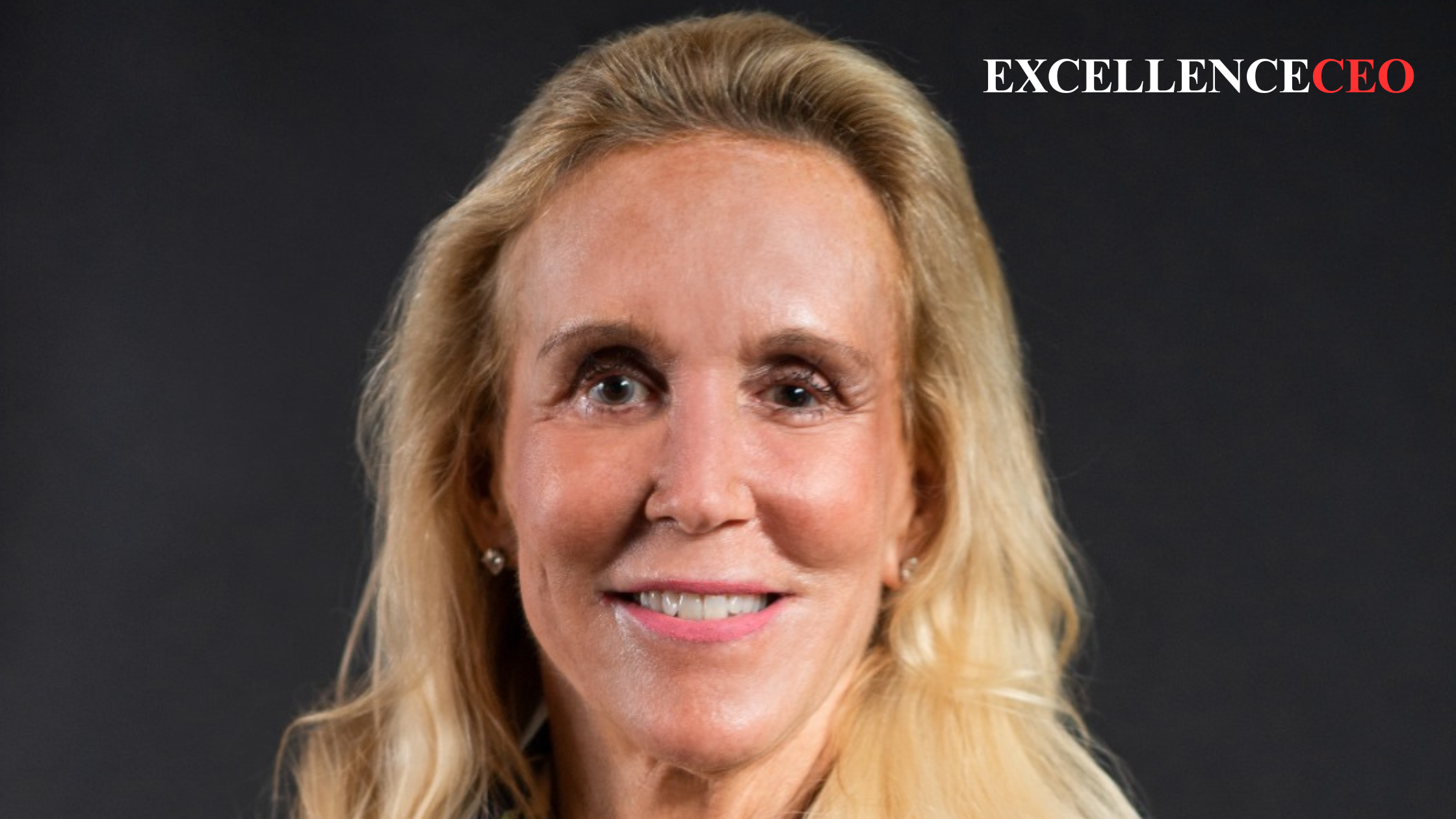
Few people have spent as much time observing that evolution up close as Lin. As Founder and President of Great Circle Associates, she has advised executives, boards, and leadership teams across industries as they navigate mergers, acquisitions, restructuring efforts, CEO transitions, cultural transformations, and enterprise-wide strategic change.
Her work places her inside organizations at moments when expectations are high, uncertainty is unavoidable, and leadership decisions carry consequences that extend well beyond quarterly results. Rather than offering formulas or quick fixes, she helps leaders develop the mindset required to move confidently through complexity while bringing others with them.
Beyond the Strategy Deck
Corporate transformation is often presented as a strategic exercise. Organizations spend months refining business plans, developing implementation roadmaps, and forecasting financial outcomes, believing that a carefully designed strategy will naturally produce meaningful change. Yet many of these initiatives lose momentum long before they achieve their intended results, not because the strategy lacked intelligence, but because the organization was never fully prepared to embrace what the strategy demanded.
She has spent much of her career examining why this happens. In her view, transformation succeeds only when leaders look beyond processes and organizational charts to address the beliefs, behaviors, and relationships that shape how people actually work together. “Successful transformation is about more than strategy,” she says. “It’s about fostering accountability, inspiring belief in what’s possible, and building an enduring culture of empowerment and growth.” It is a perspective that shifts the conversation away from implementation alone and toward the deeper question of whether an organization is truly prepared to evolve.
That philosophy eventually became the foundation of what Lin calls Change at Core™, an approach that challenges leaders to move beyond incremental improvements and confront the deeply embedded assumptions that quietly influence everyday decisions. Rather than asking what needs to change first, she asks why existing patterns continue to exist at all. The answer, she believes, is almost always found in culture rather than process.
A Career Built Where the Stakes Were Highest
Long before she became an executive coach, Lin built her reputation inside large corporations where transformation was not an abstract leadership concept but an operational necessity. Throughout her executive career, she led initiatives involving business integrations, digital launches, organizational restructurings, operational turnarounds, and preparations for multiple public offerings. These assignments demanded more than technical expertise. They required the ability to unite people around a shared direction while making difficult decisions under constant pressure.
Those experiences fundamentally shaped the way she thinks about leadership today. She saw firsthand that organizations rarely struggle because they lack capable people. More often, talented individuals become trapped inside systems, habits, or cultures that discourage innovation and reward maintaining the status quo. Solving those problems required leaders who could balance strategic thinking with emotional intelligence, operational discipline with empathy, and bold ambition with the humility to listen.
“I was on a mission to share what I had learned about transformational leadership. It was natural for me to become an executive coach focused on collaborating with leaders and leadership teams who are at significant inflection points in their careers.”
That decision transformed years of operating experience into a practice dedicated not simply to improving leadership performance, but to helping executives build organizations capable of thriving long after a single transformation initiative has ended.
The Common Thread Behind Every Leadership Challenge
Although her clients operate in different industries and face different competitive realities, she has noticed that the underlying leadership challenges are remarkably similar. Whether she is advising a newly appointed CEO, guiding an executive team through a post-merger integration, or helping an established organization prepare for its next phase of growth, the conversation almost always returns to one central question: how do leaders inspire people to embrace a future they cannot yet see?
The answer rarely begins with authority. Instead, she believes it begins with trust, clarity, and purpose. Leaders who communicate only what is changing often generate uncertainty. Those who explain why change matters and connect it to a compelling vision give people something far more powerful than instructions. They provide meaning. In an era defined by constant disruption, the ability to create alignment around a shared purpose has become one of the most valuable leadership capabilities of all, and it remains at the heart of everything Lin teaches.
Coaching Leaders to Think Beyond the Immediate Problem
One of the qualities that distinguishes her work is that she rarely begins with the problem a client believes they need to solve. A struggling integration, declining engagement scores, executive conflict, or slowing growth may be the issue that prompts the initial conversation, but those are often symptoms rather than root causes. Years of leading transformational initiatives taught her that organizations rarely falter because of a single decision. More often, they reach a point where long-standing assumptions, leadership habits, and cultural norms no longer support the future the business is trying to create.
That philosophy changes the role of an executive coach. Rather than acting as an outside expert who arrives with ready-made answers, she becomes a strategic partner whose first responsibility is understanding how leaders think before helping them determine what they should do. She spends considerable time learning an organization’s business model, competitive pressures, leadership dynamics, and culture because she believes meaningful advice is impossible without context. Every recommendation must fit the realities of the organization, not simply reflect best practices from another company or industry.
“I invest heavily in understanding their business models. My coaching and advisory methods marry the sublime with the pragmatic, allowing for creativity and bold ideas but with an emphasis on self-discovery, focused implementation, and measurable outcomes.”
That balance between reflection and execution has become a defining characteristic of her approach. Leadership development, in her view, is valuable only when it produces tangible results for both the individual and the organization.
The Questions That Reveal Better Leaders
Before discussing strategy or organizational priorities, she often asks leaders to examine themselves. It is a deceptively simple exercise that frequently uncovers the beliefs, experiences, and behaviors influencing every major decision they make. She believes leadership becomes far more effective when individuals understand not only what motivates them but also what limits them.
One area she pays particular attention to is what she describes as one of leadership’s most underestimated challenges: imposter syndrome. Despite years of experience and impressive accomplishments, many senior executives quietly question whether they truly deserve their positions. Those doubts rarely become visible to colleagues, yet they influence decision-making in subtle but significant ways. Leaders may avoid difficult conversations, hesitate to take calculated risks, overcompensate through perfectionism, or become reluctant to delegate meaningful responsibility.
She believes acknowledging those feelings is not a sign of weakness but an important step toward becoming a stronger leader. “The only way to stop feeling like an imposter is to stop thinking like one,” she says. Rather than allowing self-doubt to dictate decisions, she encourages leaders to focus on purpose, contribution, and service. When attention shifts away from proving personal worth and toward creating value for others, confidence often follows naturally. It is a mindset that not only benefits the individual but also creates healthier, more resilient leadership cultures.
Leadership Is Built on Values, Not Titles
Throughout her career, she has remained remarkably consistent about one principle: leadership is defined by behavior rather than position. Titles create authority, but they do not automatically inspire trust, loyalty, or commitment. Those qualities must be earned repeatedly through everyday actions, especially during periods of uncertainty when employees look to leaders for reassurance and direction.
More than three decades ago, Lin articulated a set of personal leadership values that continue to shape her work today. They include celebrating uniqueness, practicing generosity of spirit, demonstrating professional and intellectual humility, embracing reciprocity, leading with transparency, challenging the status quo, and acting with courage. While these principles may sound straightforward, she believes they become truly meaningful only when leaders consistently apply them under pressure.
One value she returns to frequently is humility. In many organizations, executives feel pressure to project certainty even when facing unfamiliar situations. Lin argues the opposite approach often builds stronger credibility. Leaders who acknowledge they do not have every answer create space for collaboration, encourage diverse perspectives, and invite others to contribute ideas that might otherwise remain unheard. Humility, in this sense, is not the absence of confidence but the willingness to recognize that the best solutions are rarely developed alone.
Why Trust Is the Foundation of Transformation
Almost every successful transformation she has witnessed shares one common characteristic. It begins with trust. Without it, even the most compelling vision struggles to gain traction because employees question motives, resist change, or simply wait for the initiative to lose momentum. With it, organizations become far more willing to embrace uncertainty because people believe leadership is acting in the organization’s best interests rather than pursuing change for its own sake.
Building that trust requires far more than frequent communication. She believes leaders must become exceptional listeners, particularly when faced with resistance. Too often, skepticism is dismissed as negativity when it may actually contain valuable insights about risks, blind spots, or operational realities. Listening carefully allows leaders to distinguish between opposition rooted in fear and opposition rooted in legitimate concern.
She recalls one particularly challenging integration where many leaders within the acquired company believed they should have been the acquiring organization instead. Rather than dismissing those views, she intentionally sought out the strongest critics. She listened carefully, identified aspects of their culture worth preserving, and incorporated those strengths into the newly combined organization. The result was not simply greater acceptance of change but a stronger business built on the best elements of both companies. For her, that experience reinforced an important lesson: transformation accelerates when people feel heard, respected, and invited to help shape the future.
Preparing Leaders for What Comes Next
Business has entered an era where change is no longer an occasional event but a constant condition. Artificial intelligence, evolving customer expectations, geopolitical uncertainty, and rapidly shifting markets ensure that organizations will continue facing challenges with few historical precedents. She believes this reality demands a new generation of leaders who think differently about both success and responsibility.
Technical expertise will always matter, but it is no longer sufficient on its own. Future leaders must be capable of integrating strategic thinking with emotional intelligence, technological understanding with ethical judgment, and operational excellence with a genuine commitment to developing others. They must become comfortable making decisions without complete information while creating cultures resilient enough to adapt as circumstances evolve.
For her, that future is ultimately optimistic. Every major disruption creates an opportunity for leaders willing to question assumptions, embrace learning, and inspire others through purpose rather than authority alone. Organizations that cultivate those qualities will be better equipped not only to navigate uncertainty but also to shape it.
After decades spent helping executives navigate their most defining moments, she remains convinced that transformation is never simply about changing organizations. At its core, it is about helping people discover that they are capable of leading far beyond what they once believed possible.