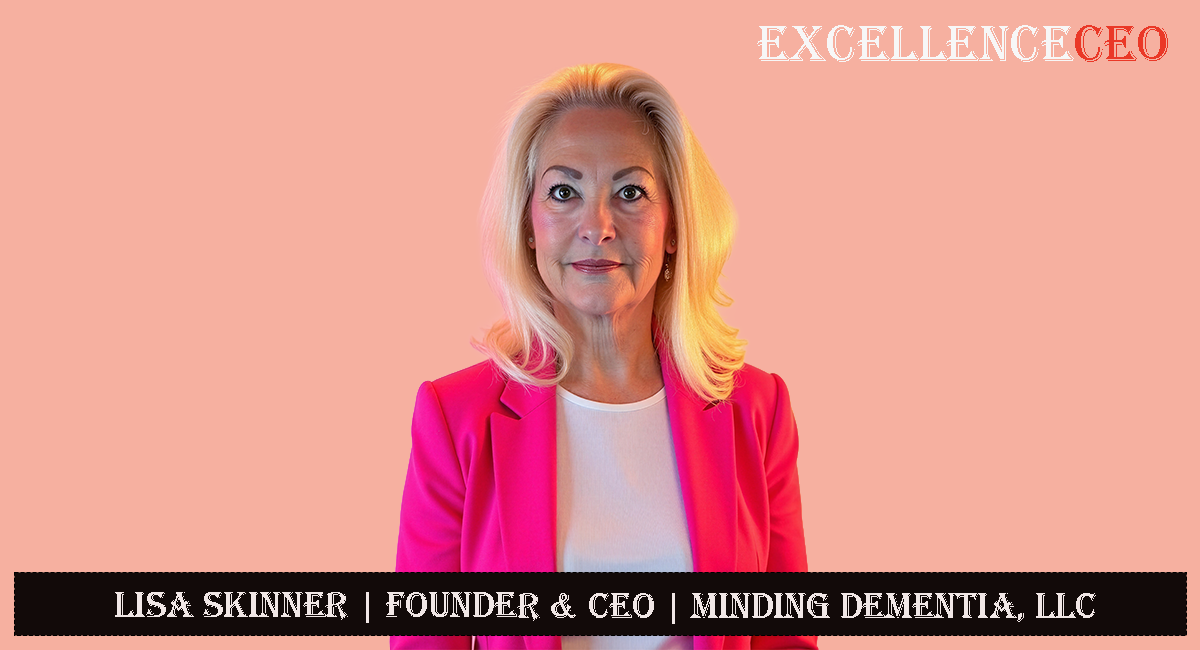
With over three decades of experience, eight family members who lived with dementia, and a determination to challenge society’s misconceptions, Lisa Skinner has turned a deeply personal journey into a mission for change. As the founder and CEO of Minding Dementia, LLC, she is reshaping dementia education through compassion, practical knowledge, and a belief that every individual deserves dignity, purpose, and meaningful human connection.
For most families, an Alzheimer’s diagnosis marks the beginning of an unfamiliar journey. Conversations change, routines become unpredictable, and once-simple interactions can leave loved ones searching for answers. Beyond the medical challenges lies something equally difficult: understanding how to maintain meaningful connections when dementia begins changing everyday life.
Lisa Skinner has spent more than 30 years helping families navigate these realities. Having witnessed eight members of her own family live with dementia, she understands the experience from both personal and professional perspectives.
Today, through Minding Dementia, LLC, Skinner is challenging conventional perceptions of cognitive decline. Her mission centers on a powerful idea: while dementia changes how people experience the world, it does not diminish their humanity.
“At the heart of my philosophy is a powerful belief: education is a form of care,” she says.
That conviction has become the foundation of her work and the driving force behind an organization that aims to make dementia education more practical, compassionate, and accessible.
A Mission Born From Experience
Some careers begin with ambition. Others emerge from experiences that leave a lasting impression. For Lisa Skinner, her professional journey carries the weight of both personal responsibility and a deep understanding of human vulnerability.
Eight members of her family lived with dementia, exposing her to the emotional realities that accompany cognitive decline. She saw how the condition could transform familiar relationships and introduce uncertainty into everyday situations.
Those experiences shaped her perspective as she built a career in eldercare. Over three decades, she worked alongside families, care partners, physicians, and individuals living with Alzheimer’s disease and related dementias.
Throughout that time, one problem continued to surface. Families frequently received a diagnosis without enough practical guidance to manage the challenges that followed.
“For me, dementia is never simply just a clinical condition. It affects identity, relationships, safety, communication, and dignity,” Skinner explains.
She recognized that families needed more than clinical information. They needed someone to help them understand unfamiliar behaviors, navigate difficult conversations, and respond to emotional distress. Her personal experiences gave those professional observations greater meaning. She understood that every diagnosis affected an entire network of relationships, responsibilities, and emotions.
Rather than accepting those challenges as unavoidable sources of confusion, Skinner began exploring how education could help families approach dementia differently.
That curiosity eventually developed into a lifelong commitment to improving the experiences of individuals living with the condition.
The Lessons That Shaped Her
Skinner’s professional development extended far beyond traditional eldercare settings. She pursued opportunities to share her knowledge, connect with wider audiences, and develop practical resources for families and professionals.
Before establishing Minding Dementia, she contributed to two bestselling books, delivered a TEDx Talk, created a highly rated global podcast, and developed educational products, including a training course. Each initiative reflected her desire to make specialized knowledge accessible to people who needed it. She also invested in continuous learning through certifications, professional courses, and mentorship in leadership, strategy, operations, and customer experience.
Her contributions earned her an Honorary Doctorate Degree, Honoris Causa, in Dementia Care and Cognitive Health Leadership, recognizing her national and international impact.
Yet Skinner’s most valuable lessons came from listening to families.
“Families and caregivers do not need information alone. They need knowledge they can use when real-life caregiving becomes complicated,” she explains.
She learned that a caregiver facing a difficult moment rarely needs another complicated explanation. They need practical strategies that help them understand what is happening and determine how to respond. That distinction changed how she approached education.
Instead of concentrating exclusively on symptoms and clinical terminology, she began emphasizing communication, emotional understanding, and everyday problem-solving.
For Skinner, expertise matters most when it helps someone navigate a real situation with greater confidence.
Building Minding Dementia
In 2022, Skinner founded Minding Dementia, LLC, in Napa, California, after recognizing a persistent gap in dementia education.
Families often struggled with fragmented information, inconsistent guidance, and limited access to practical support. Skinner believed she could create an organization that addressed those challenges while maintaining a deeply human approach.
Minding Dementia focuses on education and awareness surrounding Alzheimer’s disease and related dementias. Its offerings include workshops, training sessions, communication-focused learning, and practical resources for families and care professionals. The organization emphasizes person-centered care, encouraging caregivers to consider the individual’s experiences rather than focusing solely on the condition.
Skinner also wanted to build a company that valued reliability, responsive communication, and long-term relationships.
Her vision extended beyond delivering educational services. She wanted to create a culture where people understood the importance of their work and felt motivated to contribute to meaningful outcomes.
“We don’t just deliver what the customer asks for, we deliver what the customer needs to succeed, supported by strong execution and ongoing improvement,” she says.
That commitment reflects her belief that successful organizations must combine compassion with operational excellence.
For Skinner, building Minding Dementia represented more than an entrepreneurial milestone. It created an opportunity to turn decades of experience into a structured mission that could reach families and professionals beyond her immediate community.
Turning Knowledge Into Care
One of Skinner’s most important contributions lies in how she encourages caregivers to interpret behavior. When someone living with dementia becomes distressed, refuses assistance, or responds unexpectedly, caregivers may naturally feel frustrated or confused. Skinner encourages them to look beyond the immediate behavior.
Could the person feel frightened? Might an unfamiliar environment be overwhelming? Has a change in routine created uncertainty? Could an unmet need explain the response?
These questions form the foundation of her educational approach.
Through techniques such as validation, de-escalation, environmental adjustments, and thoughtful routine changes, Skinner helps caregivers develop more compassionate responses.
“Education does not eliminate the challenges of dementia. What it can do is replace guesswork with understanding and help caregivers face difficult moments with greater steadiness,” she explains.
Her philosophy recognizes that dementia care rarely offers simple solutions. Every individual brings different experiences, needs, and emotional responses.
However, she believes practical education can improve the way caregivers approach difficult situations.
Breaking the Silence
Dementia remains a subject that many people hesitate to discuss. Fear, stigma, and misinformation often prevent families from seeking guidance until they encounter significant challenges.
Skinner recognized these barriers before establishing her company.
“The most important risk I took was launching in a market that people typically choose to ignore and/or don’t want to talk about due to fear and risk of stigma,” she recalls.
Her decision reflected a willingness to confront an uncomfortable reality rather than avoid it. She believes harmful misconceptions about brain diseases continue to influence how society treats individuals living with dementia.
These assumptions can create unnecessary isolation and prevent families from recognizing the possibilities for meaningful experiences. Skinner wants to replace those misconceptions with understanding. She emphasizes that people living with dementia remain individuals with emotional needs, personal histories, and a fundamental desire for connection.
Her concerns also extend to the future. With dementia prevalence expected to rise substantially in the coming decades, she believes families and communities must become better prepared.
“We can no longer afford to ignore what’s coming. As a society, we are simply unprepared for it,” she warns.
Through education, public speaking, and advocacy, Skinner continues encouraging conversations that challenge stigma and promote practical awareness.
For her, changing public perceptions represents an essential step toward improving dementia care.
The Courage to Lead
Building a business around a sensitive subject requires persistence, particularly when the market itself remains reluctant to confront the problem. Skinner understood that Minding Dementia would face challenges beyond those of a conventional educational organization.
She needed to establish trust, communicate the value of practical dementia education, and reach people who might not recognize their need for support until a crisis emerged. Rather than allowing those obstacles to limit her ambitions, she focused on developing reliable services and meaningful relationships.
Her experience in eldercare operations helped her understand the importance of consistency, accountability, and effective systems. She also recognized that organizational growth could introduce new challenges if internal processes failed to keep pace.
Throughout her entrepreneurial journey, Skinner has emphasized disciplined planning and continuous improvement.
Empathy at the Core
Skinner’s leadership philosophy reflects the same principles that guide her approach to dementia education. She believes effective leadership begins with understanding people and creating an environment where trust can develop naturally.
“Empathy and vulnerability are central to my leadership style because they create psychological safety and real trust,” she explains.
For Skinner, empathy allows leaders to recognize concerns that may not appear in formal reports or performance evaluations. She also believes vulnerability strengthens relationships by encouraging honesty and accountability.
“Vulnerability matters because it prevents leadership from becoming performative,” she says.
Her management approach emphasizes clear expectations, respectful feedback, recognition of individual contributions, and sustainable working practices. When disagreements arise, she encourages careful listening and constructive discussion.
Skinner believes leaders should acknowledge mistakes, remain open to criticism, and focus on practical improvements rather than defensiveness. She applies those principles to customer relationships as well.
Feedback provides valuable insight into service quality, communication, and customer experience. When recurring concerns emerge, she uses them to guide organizational improvements. For Skinner, compassion and business discipline are not competing priorities.
Preparing for Tomorrow
As dementia continues affecting families across generations, Skinner is expanding her attention toward emerging caregiving challenges. One of her upcoming priorities involves the sandwich generation, adults who simultaneously care for aging parents while raising children and managing professional responsibilities.
These individuals often face competing emotional, financial, and practical demands. When an aging parent develops dementia, those responsibilities can become particularly difficult to manage.
Skinner recognizes that these families need educational support that reflects the complexity of their circumstances. Minding Dementia plans to develop additional services and resources for individuals and organizations navigating these challenges.
Her broader strategy also emphasizes improving customer experience, expanding educational capabilities, and strengthening internal systems.
“Innovation doesn’t only mean new ideas, it means refining what already works until customers consistently feel the benefit,” she explains.
Rather than pursuing growth for its own sake, Skinner wants every improvement to strengthen the organization’s ability to support caregivers.
A Vision Beyond Borders
Skinner’s long-term ambition is to establish Minding Dementia as the most trusted provider of dementia education globally.
Over the next three to five years, she plans to expand the organization’s reach while maintaining the quality and compassion that define its services. Her priorities include strengthening educational offerings, developing specialized talent, improving operational systems, and building lasting customer relationships.
She understands that sustainable growth requires careful planning. Talent shortages, changing market conditions, and operational pressures may create obstacles, but Skinner believes consistent execution and customer-focused decisions can help overcome them.
She also wants employees and collaborators to understand how their contributions support the organization’s larger purpose. Clear communication, meaningful feedback, and shared goals remain central to that vision.
Skinner believes the most successful organizations create environments where people feel connected to the work they perform. She wants practical dementia education to become a trusted resource for caregivers and professionals across communities.
For Skinner, international growth represents an opportunity to expand compassion, strengthen understanding, and improve the experiences of people living with dementia.
A Legacy of Understanding
For Lisa Skinner, success cannot be measured solely through organizational growth, professional recognition, or business achievements. It also lives in the everyday moments when education changes someone’s experience.
A caregiver who responds with patience instead of frustration. A family that discovers a more effective way to communicate. An individual living with dementia who experiences comfort and reassurance during a difficult moment.
These outcomes represent the purpose behind her work. Her advice to aspiring entrepreneurs reflects the values that have guided her own journey.
“Build your business on something stronger than ambition, build it on customer value, integrity, and learning speed,” she advises.
Skinner encourages emerging leaders to understand the people they serve, develop reliable systems, and remain committed to continuous improvement. She also believes entrepreneurs should measure success through the quality of their decisions rather than focusing exclusively on immediate results.
Her own career illustrates that philosophy.
Eight family members gave her a personal understanding of dementia. Three decades of professional experience revealed the gaps in practical education. And the establishment of Minding Dementia gave her a platform to address those challenges.
Today, she continues working toward a future where families feel better prepared, caregivers possess greater confidence, and people living with dementia receive the dignity they deserve.
Her story demonstrates that meaningful entrepreneurship can emerge from deeply personal experiences and grow into a mission that serves entire communities.
For Skinner, the ultimate goal is not simply to teach people about dementia. It is to help them see the person beyond the diagnosis.
And as she continues building that legacy, one belief remains at the heart of her work: dementia may change how someone experiences life, but compassion and understanding can help preserve the human connections that make life meaningful.